


Housecall Pro: Field Service
Codefied Inc.
Running a field-service business often means doing the actual job while also trying to remember who needs an estimate, which technician is going where, whether an invoice was sent, and what still needs a follow-up. That constant switching is the recurring problem Housecall Pro: Field Service is designed to reduce. I found its main value in bringing the office side of a service call into one business app instead of forcing me to piece the workflow together from messages, calendars, notes, and separate invoicing tools.
Housecall Pro is a free business app from Codefied Inc., aimed at service professionals who work away from a desk. It combines estimating, scheduling, dispatching, and invoicing in one place. The app has built a substantial user base, with over 500 thousand installs, a 4.5 average from around 6.7 thousand ratings, and roughly 1.6 thousand written reviews. Those figures do not replace hands-on testing, but they do suggest that the product is serving a real audience rather than being a niche experiment.
My overall impression is that it works best when the business has enough appointments to make coordination a daily concern, but is still small enough that a complicated enterprise platform would feel excessive. A solo plumber, electrician, cleaner, landscaper, or repair professional can use it to keep customer work moving. A small team can also use it as a shared operational workspace. However, it is not automatically the right answer for every business, especially if all you need is a simple calendar or if your company already depends on a specialized accounting and dispatch system.
Turning a service call into a repeatable workflow
The first setup should mirror the way the business actually works
The useful way to approach this app is not to treat it as another calendar. Its strength comes from connecting stages that are usually separated. A customer request can lead to an estimate, an accepted job can move onto the schedule, a technician can be dispatched, and completed work can lead to an invoice. That chain matters because the most expensive administrative mistakes often happen between stages, not during the work itself.
When I set up a tool like this, I would begin with the company’s real service categories and the people who need to see each job. The goal is to make the schedule understandable at a glance, not to create a perfect database on the first day. If a team handles emergency repairs, planned installations, and routine maintenance, those jobs should be recognizable without opening every appointment. Clear naming and consistent notes are more valuable than filling the system with unnecessary detail.
Related News

Why WhatsApp Messenger Still Makes Everyday Communication Feel Easy

Jurassic World: The Game Is the Better Dino Tycoon for Strategic Players

Threads in Real Life: Who Should Join, Lurk, or Leave

How SHEIN Turned Shopping Into an Endless Content Feed

How to Make Fortnite Feel Smarter on Mobile

Should You Switch to Microsoft Outlook on Mobile?
The next practical step is deciding what information must be captured before a job is sent out. A useful job record should answer basic questions quickly: who is the customer, where is the work, what has already been promised, and what does the technician need to know before arriving? The app becomes much more useful when those details are recorded once and reused through the workflow instead of being retyped into a message, a paper form, and an invoice.
I also recommend starting with a small, repeatable process rather than trying to digitize every office habit immediately. Create one estimate, schedule one ordinary job, assign it, and complete the invoicing step. This exposes missing information early. It also gives the team a shared example of what “finished” means. For a business moving away from notebooks or scattered phone conversations, that first complete loop is more valuable than a long configuration session.
Estimates are more useful when they lead somewhere
Many service apps can produce an estimate, but the important question is what happens after the customer responds. With this app, the estimate is part of a broader job process rather than an isolated document. That makes it easier to think in terms of the customer journey: request, quote, approval, appointment, work, and payment request.
Gallery
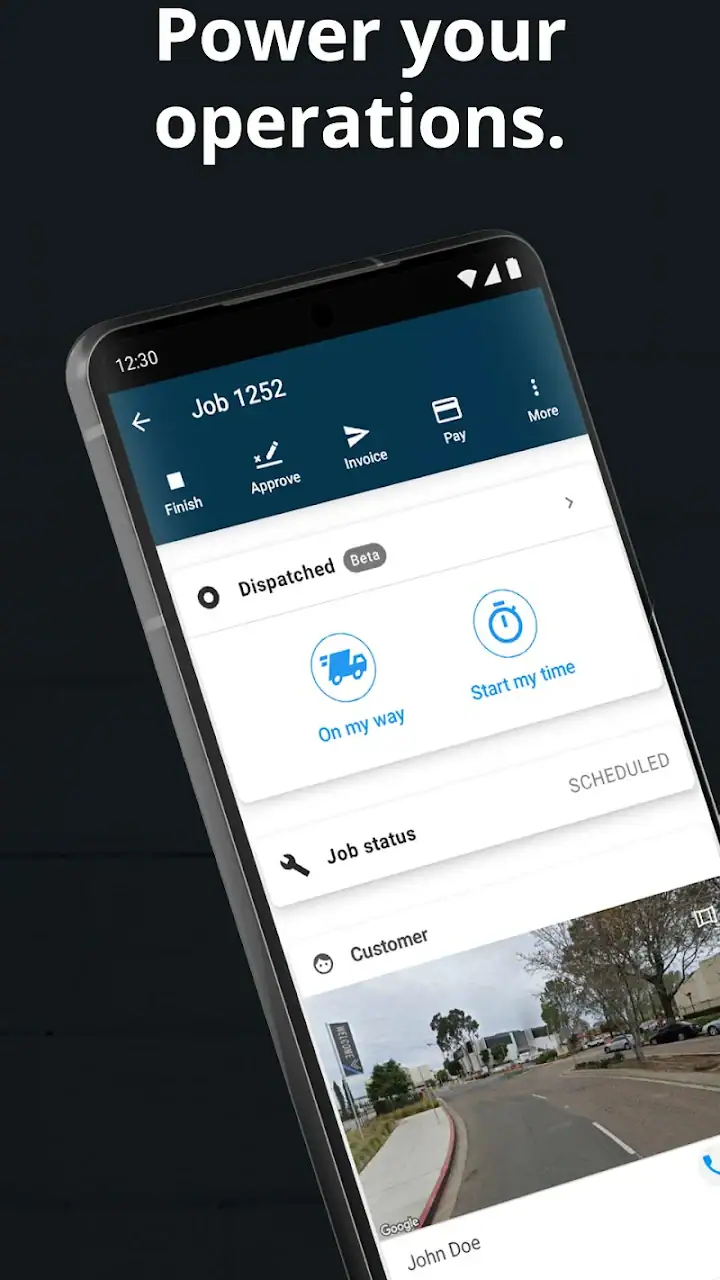
A practical habit is to write estimates so the later job record does not need to be rebuilt from memory. Include the scope in plain language and make the line items understandable to someone who was not present during the visit. This is not just presentation polish. A clear estimate gives the technician and the office the same reference point, which can reduce awkward conversations when the final invoice is prepared.
There is also a trade-off here. A connected workflow can save time, but it makes the quality of the initial entry more important. If an estimate is vague, the same vagueness can travel into scheduling and billing. I would therefore use the app’s structure to standardize the essentials, while avoiding overly elaborate templates that slow down a busy technician.
Scheduling and dispatch are where the time savings become visible
The scheduling side is most valuable when several jobs are changing during the day. A paper calendar may be perfectly adequate for one person with a predictable route, but it becomes fragile when appointments move, technicians are unavailable, or customers need a different time. A shared digital schedule gives the office a clearer place to make changes and gives the field team a current reference.
Dispatching is not simply assigning a name to a job. It is also about making sure the assignment contains enough context to be useful. Before sending work out, I would check the address, job description, customer notes, and any estimate information that affects the visit. This small review prevents a common failure in field operations: the technician arrives with a time slot but not enough understanding of the problem.
One non-obvious benefit is that a single job record can reduce the need for repeated explanations. If the customer calls the office after speaking with the technician, the person answering can work from the same job history rather than asking the customer to retell everything. That is a modest improvement on each call, but it becomes meaningful across a full week of service work.
A realistic day with Housecall Pro
Imagine a small heating and cooling business starting the morning with a planned maintenance visit, an estimate request, and an urgent repair. The office can place the known appointments on the schedule, prepare the estimate request for follow-up, and assign the urgent job to the technician who is available. As the day changes, the schedule becomes the place to update the plan rather than relying on a chain of personal texts.
At the first visit, the technician can review the job information before arriving. If more work is identified, the business can keep the new scope connected to the customer’s record instead of leaving it as a note on a clipboard. Once the work is complete, the office has a clearer path toward invoicing. The real advantage is not that any single action is revolutionary; it is that fewer handoffs are needed between the person doing the work and the person managing the business.
That same workflow can help a solo operator in a different way. When one person is answering calls, driving, estimating, and working, the app provides a place to resume the administrative task later. The user still has to enter accurate information, but the work is less likely to disappear into a pocket notebook or an unread message.
Invoicing feels better when it follows the job
Invoicing is often where service businesses lose time after the work itself is finished. A technician may remember the materials and labor in the moment, but delays make details harder to reconstruct. Keeping billing connected to the job helps preserve the relationship between what was scheduled, what was done, and what the customer is asked to pay.
I would treat the invoice as the final review of the service record, not as a separate administrative chore. Check that the customer details are correct, the work description matches the completed visit, and any changes from the estimate are understandable. This habit can reduce confusion for both sides, particularly when a job expanded after the initial diagnosis.
The app’s free price makes it approachable for someone testing a new workflow, but “free” should not be confused with zero effort. The business still needs a process for checking entries, handling exceptions, and making sure invoices reflect reality. Software can remove repeated typing; it cannot decide whether a technician’s description is accurate or whether a customer needs a call before billing.
Where it removes friction, and where it adds structure
The biggest friction removed is the need to maintain separate versions of the same job. Without a connected tool, an estimate might live in one place, the appointment in another, dispatch details in a text thread, and the invoice in accounting software. Every extra copy creates an opportunity for a wrong address, an outdated time, or a missing line item. Housecall Pro gives those stages a common home.
It can also make delegation easier. A business owner who normally keeps every detail in their head can give an office assistant or dispatcher a clearer operating picture. That does not eliminate the need for communication, but it changes the conversation from “What was supposed to happen?” to “This is the job; here is what needs attention.” For a growing team, that distinction can be important.
Another useful insight is that the app can expose process bottlenecks. If estimates regularly sit without a next step, or completed jobs remain unbilled, the issue becomes visible as a workflow problem rather than a vague feeling of being behind. I would use that visibility to create simple daily checks: review open estimates, confirm the next day’s schedule, and close out completed work. These checks are more valuable than constantly rearranging the interface.
There is a cost to this structure. People who are used to informal communication may initially feel that entering job details is slower than sending a quick message. That resistance is understandable, especially during a rush. The payoff appears later, when someone needs to find the customer history or understand why a job changed. Teams should agree on the minimum information required, otherwise the app can become a form-filling exercise that technicians avoid.
Who will benefit most from this app?
I think the strongest fit is a small field-service company with recurring appointments, multiple workers, or a steady flow of estimates that become jobs. It is particularly useful when the owner is still involved in daily operations but needs a better way to separate personal memory from business records. The combination of scheduling, dispatching, and invoicing addresses the parts of the day that tend to collide.
It is also a sensible option for a solo professional who expects the business to become busier. Someone with only a few predictable jobs may not feel an immediate need for a full workflow, but a connected record can prevent a painful migration later. Starting with estimates and invoices, then adding more scheduling discipline as demand grows, is a reasonable way to adopt it without changing everything overnight.
I would be more cautious if the business is primarily project-based rather than appointment-based. Large construction projects, complex inventory operations, or teams that need deep accounting controls may require a platform built around those priorities. In that situation, this app could still help with field appointments, but it may not replace the central system used for project management or finance.
It is also not ideal for someone who wants nothing more than a personal calendar. The value comes from the connected service workflow, so a simple calendar app may feel lighter if there are no estimates, dispatch decisions, or invoices to manage. Likewise, a company with an established system that already handles these stages smoothly may gain little from introducing another source of records.
Questions worth settling before relying on it
A common concern is whether a new user needs a large team to justify the app. My view is no, but the benefit depends on the number of moving parts. A solo worker can use it to keep customer work organized, while a team gains more from shared scheduling and dispatch. The smaller the operation, the more important it is to keep the setup simple and avoid creating administrative work that does not serve the business.
Another question is whether it replaces every other business tool. I would not assume that. It clearly centers the field-service flow, but businesses should compare its role with whatever they already use for accounting, payroll, inventory, or long-term project management. The best arrangement may be to let this app manage service operations while another system remains responsible for specialist financial or project tasks.
Users may also wonder whether the free price makes it suitable for professional use. It makes the app easy to try, and the core idea is accessible, but serious use still depends on disciplined data entry and team agreement. Before moving all customer work into it, I would test a complete week with real appointments and review whether the staff can keep records current without slowing urgent jobs.
The age rating is Everyone, which fits its role as a business utility rather than an entertainment product. It runs on operating systems from version 9 onward, and the current version is 2026.8.5. Those details matter when a field team uses a mixture of older and newer phones; checking the devices before rollout avoids discovering compatibility problems on a busy morning.
My final assessment after weighing the workflow
Housecall Pro succeeds because it addresses a recurring operational headache rather than offering a single isolated feature. Estimates, schedules, dispatch assignments, and invoices make more sense when they remain connected. In my experience, that connection is where the time savings come from: fewer duplicate entries, fewer searches through conversations, and less uncertainty about what should happen next.
Its limitations are mostly practical. The app cannot compensate for vague job notes, inconsistent staff habits, or a business process that has never defined who owns each step. It may also feel too structured for a very small operation with only occasional appointments, and it should not be treated as a universal replacement for specialized accounting or project software.
Still, for a field-service professional who is tired of managing work across disconnected tools, I would recommend giving it a serious trial. Start with one complete job, from estimate through invoice, then use a normal week to test schedule changes and dispatch communication. If the team keeps the records current, the app can turn scattered administrative tasks into a more dependable routine. That is the real reason I would suggest Housecall Pro: Field Service to a friend: not because it removes every business problem, but because it makes the everyday handoffs easier to see and easier to manage.
FAQs for Housecall Pro: Field Service
What is Housecall Pro: Field Service used for?
Housecall Pro: Field Service is a business management app designed for home-service professionals, including plumbers, electricians, cleaners, HVAC technicians, and other contractors. It helps manage customer information, schedule appointments, dispatch technicians, create estimates and invoices, process payments, send notifications, and track job progress from a mobile device. It is primarily intended for service businesses rather than homeowners looking to book a single repair.
Can Housecall Pro manage scheduling, dispatching, and customer appointments?
Yes. The app provides tools for organizing appointments, assigning jobs to team members, and viewing daily or upcoming schedules. Dispatchers and business owners can coordinate field workers, update job details, and communicate changes more efficiently than with paper calendars or separate messaging apps. The usefulness of these features depends on the company’s plan, staff size, internet connection, and how consistently technicians keep job information updated.
Does Housecall Pro: Field Service support estimates, invoices, and payments?
Housecall Pro includes features for creating professional estimates, converting approved work into jobs, generating invoices, and collecting payments. Businesses can use these tools to keep billing connected to completed work and reduce manual data entry. Available payment methods, transaction fees, financing options, and accounting integrations may vary according to the company’s subscription and location, so users should review current pricing and terms before signing up.
Is Housecall Pro suitable for independent contractors and small businesses?
The app can be useful for both solo contractors and growing service companies because it combines scheduling, customer management, job documentation, estimates, invoicing, and communication in one platform. However, the best fit depends on the business’s workflow and budget. Independent professionals should compare the subscription cost with the time saved, while larger teams may need to examine user limits, dispatching tools, reporting, permissions, and available integrations.
Does Housecall Pro require an internet connection, and is customer data secure?
Housecall Pro is a cloud-based service, so an internet connection is generally needed to synchronize schedules, customer records, payments, and job updates across devices. Mobile access may be limited in areas with weak connectivity, which is important for technicians working in basements, rural locations, or construction sites. Users should also protect accounts with strong passwords, restrict staff permissions, and review the provider’s current privacy and security policies.
Pros
- Easy scheduling and dispatching for field service teams.
- Customers can receive estimates
- invoices
- and payment links digitally.
- Built-in GPS and job tracking improve technician coordination.
- Automated reminders help reduce missed appointments.
- Supports online booking and customer communication in one app.
Cons
- Many useful features require a paid subscription or higher-tier plan.
- The interface may feel overwhelming for small teams at first.
- Some functions depend heavily on a stable internet connection.
- Advanced customization can require extra setup and administrative time.
- Not all features are equally available on the mobile and web versions.


